Our Building
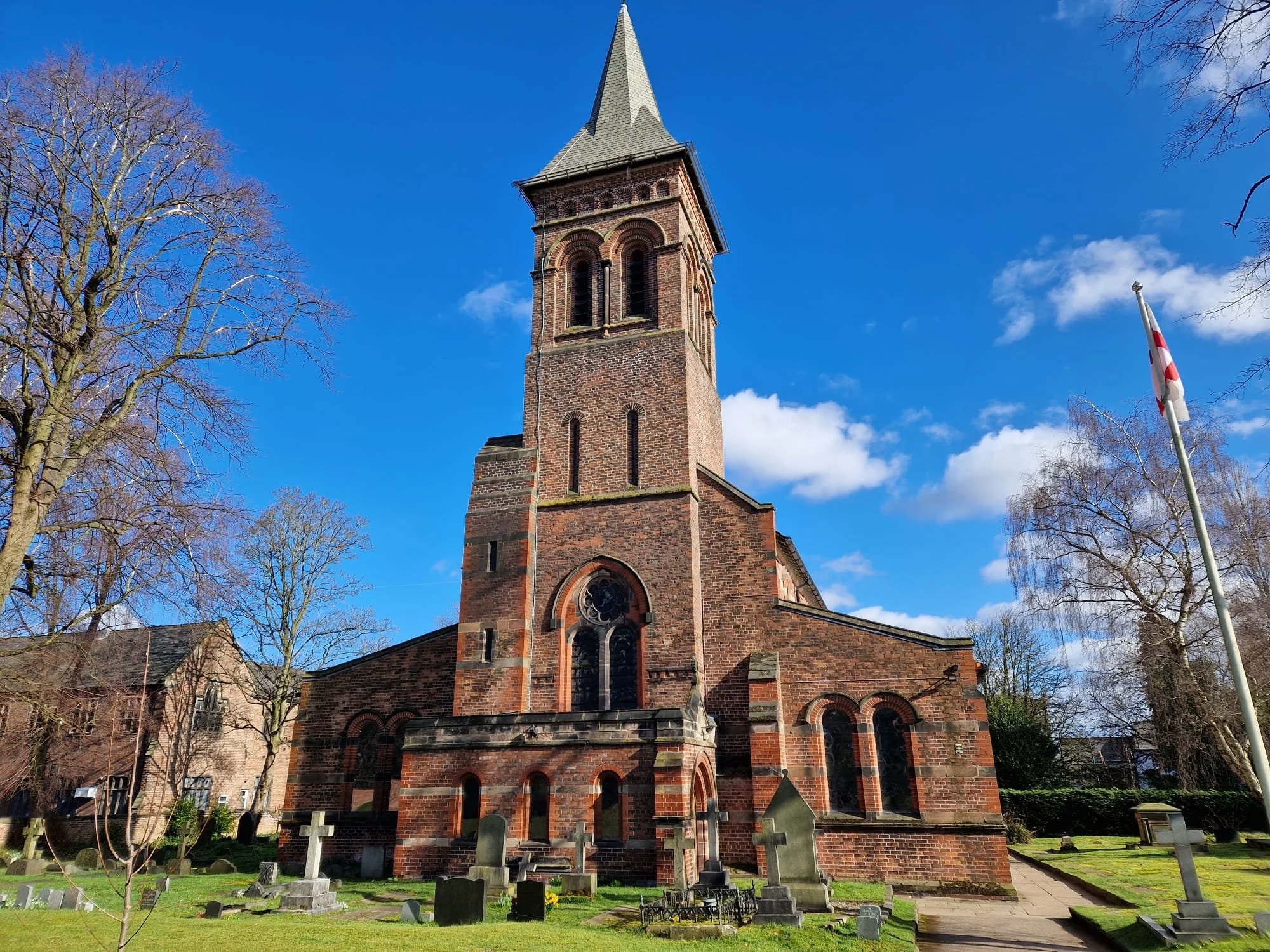
St George's Church has stood at the heart of Altrincham's story
for more than 225 years,
and continues to play an active role in the life of it’s town and community.
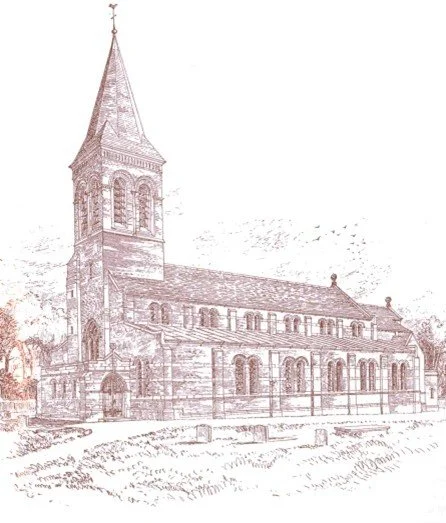
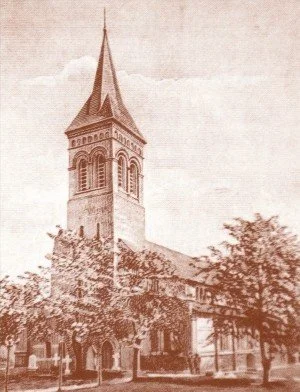
The original sketch of the building.
Founded in 1799, it was the first Anglican church established in the town and was built at a time when Altrincham was beginning to grow from its medieval market-town roots into the thriving community we know today.
The church was founded at the instigation of Revd. Oswald Leicester, following his work with the Sunday School movement in Altrincham, and he was the first priest-in-charge.
As the Parish Church of Altrincham, St George's has witnessed generations of local life, marking countless baptisms, weddings, funerals and civic occasions.
Today it remains a place where the history of the town can still be experienced, not through displays behind glass, but through a living building that continues to serve the community every day.
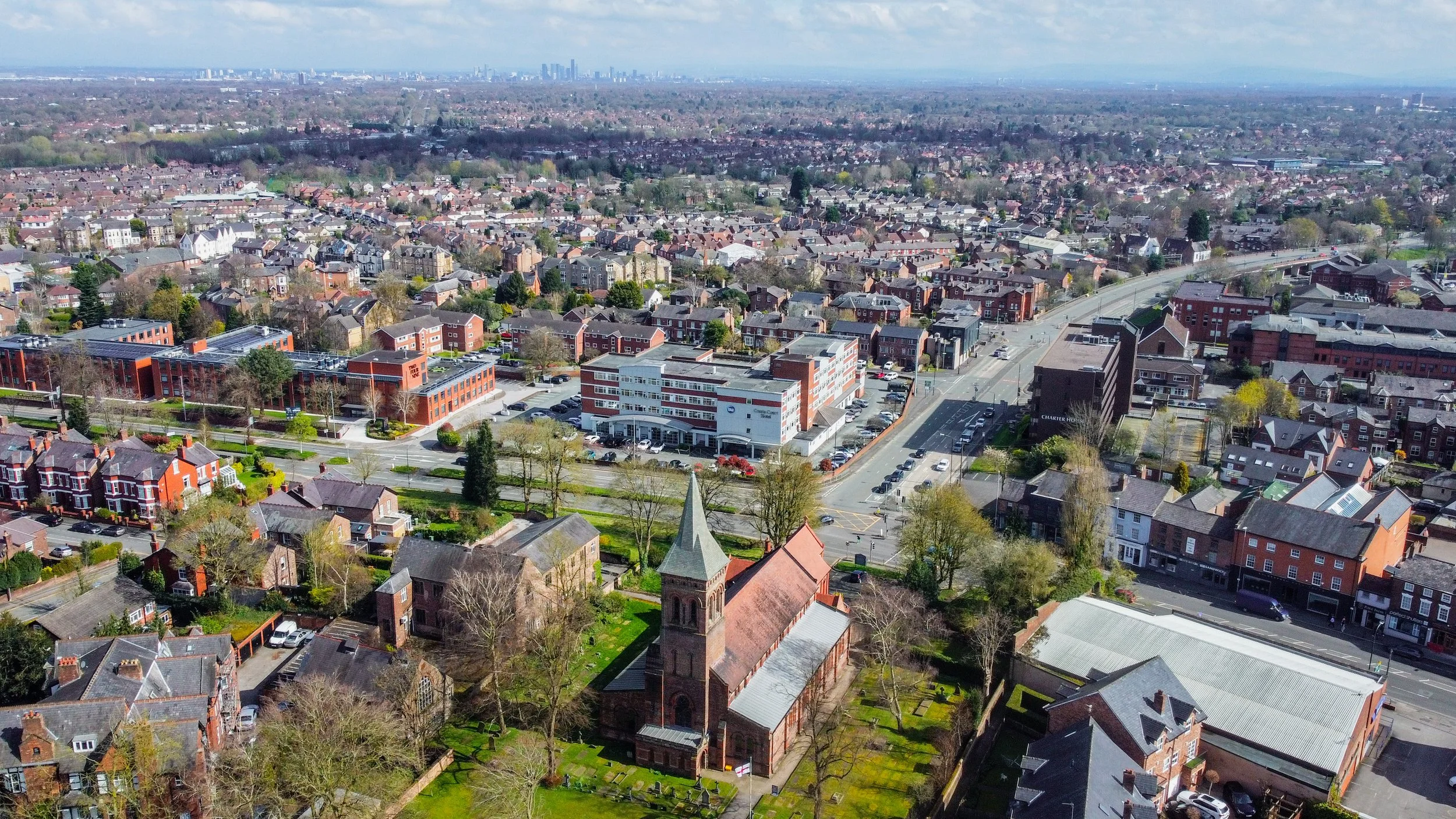
The church occupies a prominent position within the Altrincham Old Market Place Conservation Area, standing at the junction of Church Street and Stockport Road.
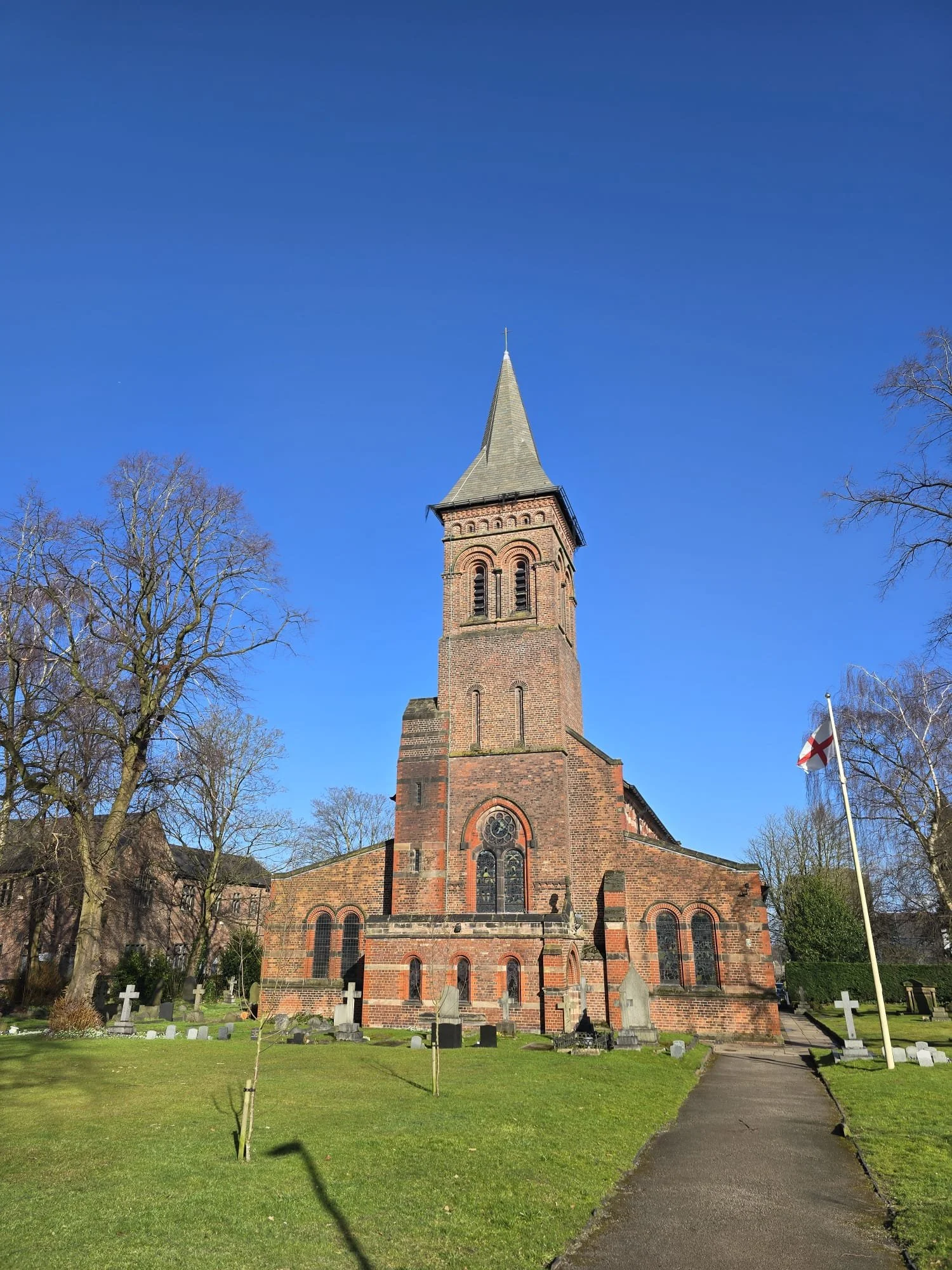
Its distinctive spire and red-brick architecture form one of the town's most recognisable landmarks, creating a striking focal point on one of Altrincham's busiest routes.
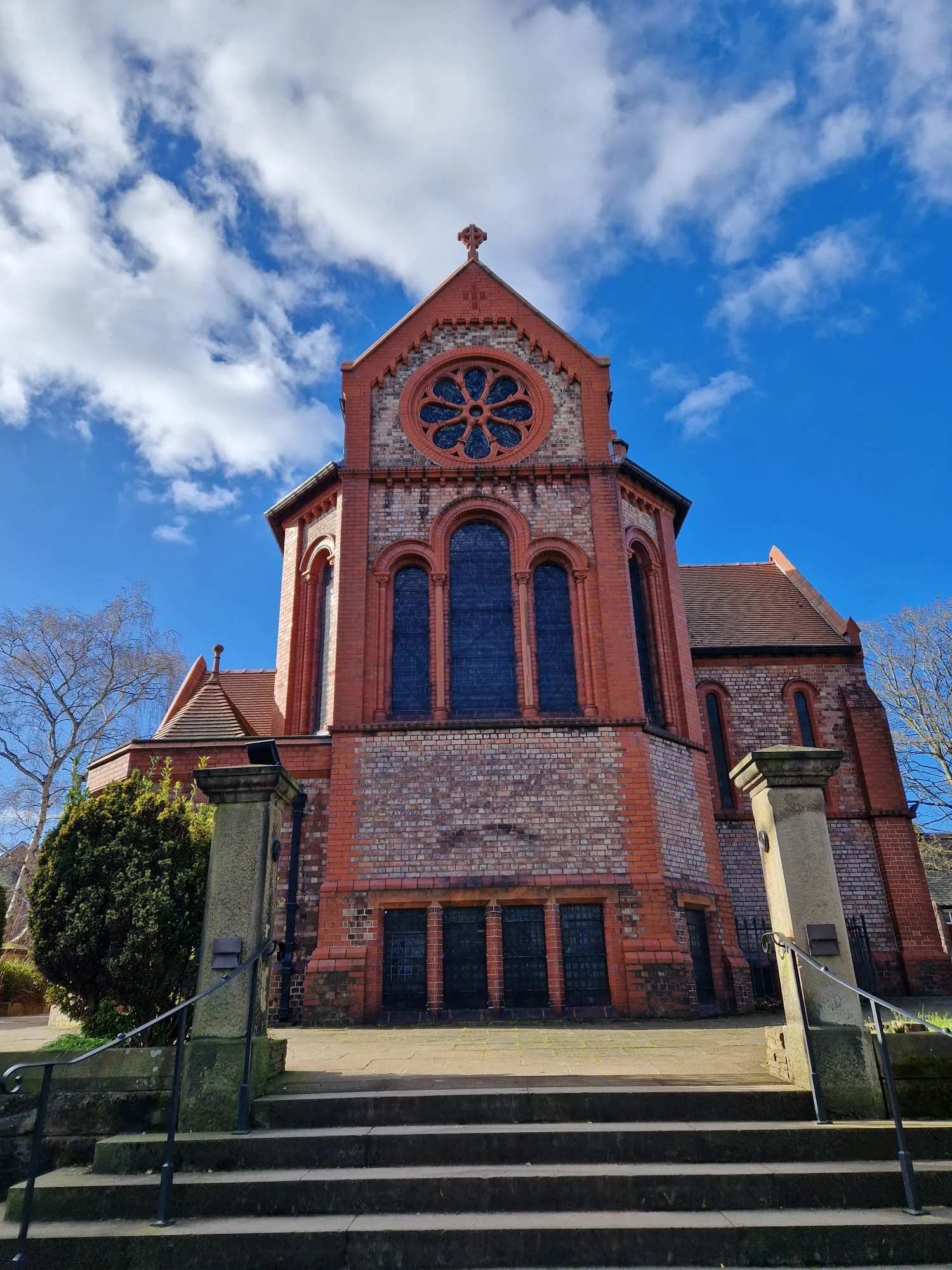
The uppermost stage and spire of the tower were completed in 1873. The work in the east end was completed in 1886 when the chancel, organ chamber and vestry were built.
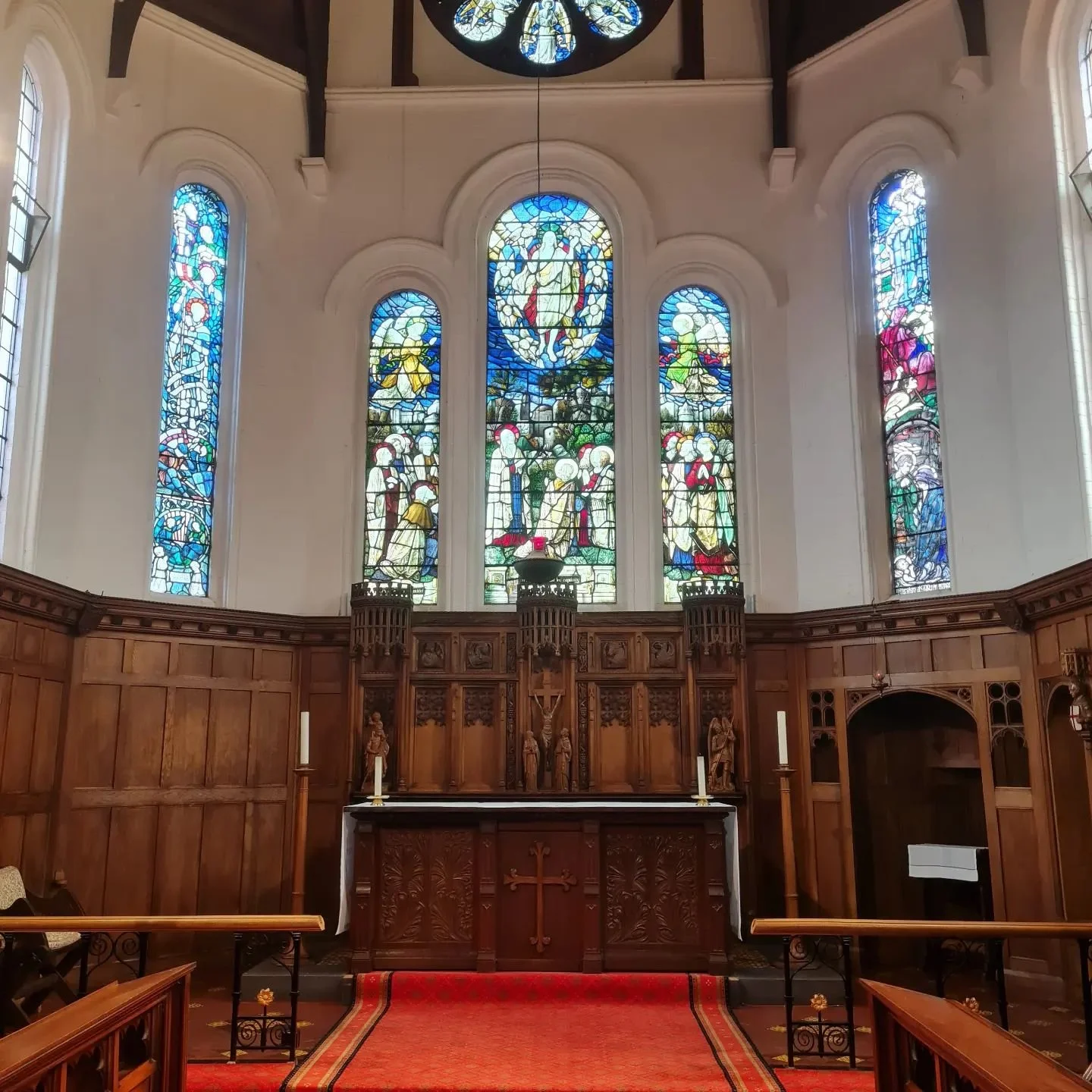
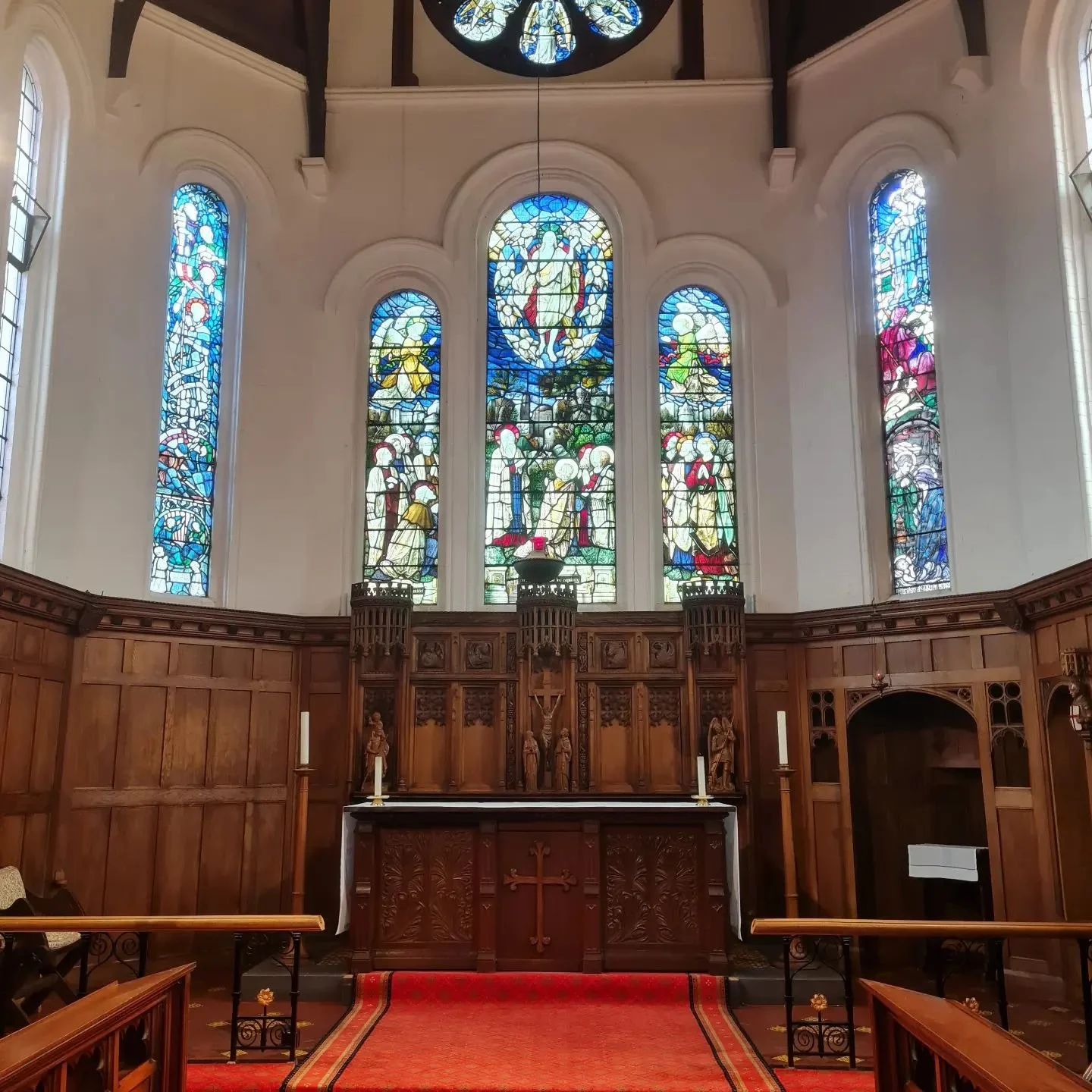
The chancel has a wheel window as well as central tripartite round headed windows.
For residents and visitors alike, the church is an important part of the townscape, helping to define the historic character of this part of Altrincham and providing a visible reminder of the town's rich heritage.
Although the church was originally built in 1799, much of the building visible today dates from the Victorian period, reflecting Altrincham's rapid expansion following the arrival of the railway.
The church evolved alongside the town, with successive extensions and rebuilding projects responding to a growing population and changing patterns of worship.
The present nave, aisles and porch were completed in 1897 to designs by the distinguished Lancashire architectural practice Paley and Austin, one of the most respected church architects of the nineteenth century: This firm practiced extensively in Lancashire and the surrounding area, designing buildings of imagination and diversity that “tended to follow Bodley’s style of rich late Decorated and Early English Perpendicular“ (Dixon 225).
Throughout their career, “Paley & Austin never repeat themselves” (Pevsner 45) indicating that each building was an individual in its own right designed by what Pevsner described as a man who “had genius”
Their work gives St George's much of its architectural character and contributes significantly to its Grade II listed status.
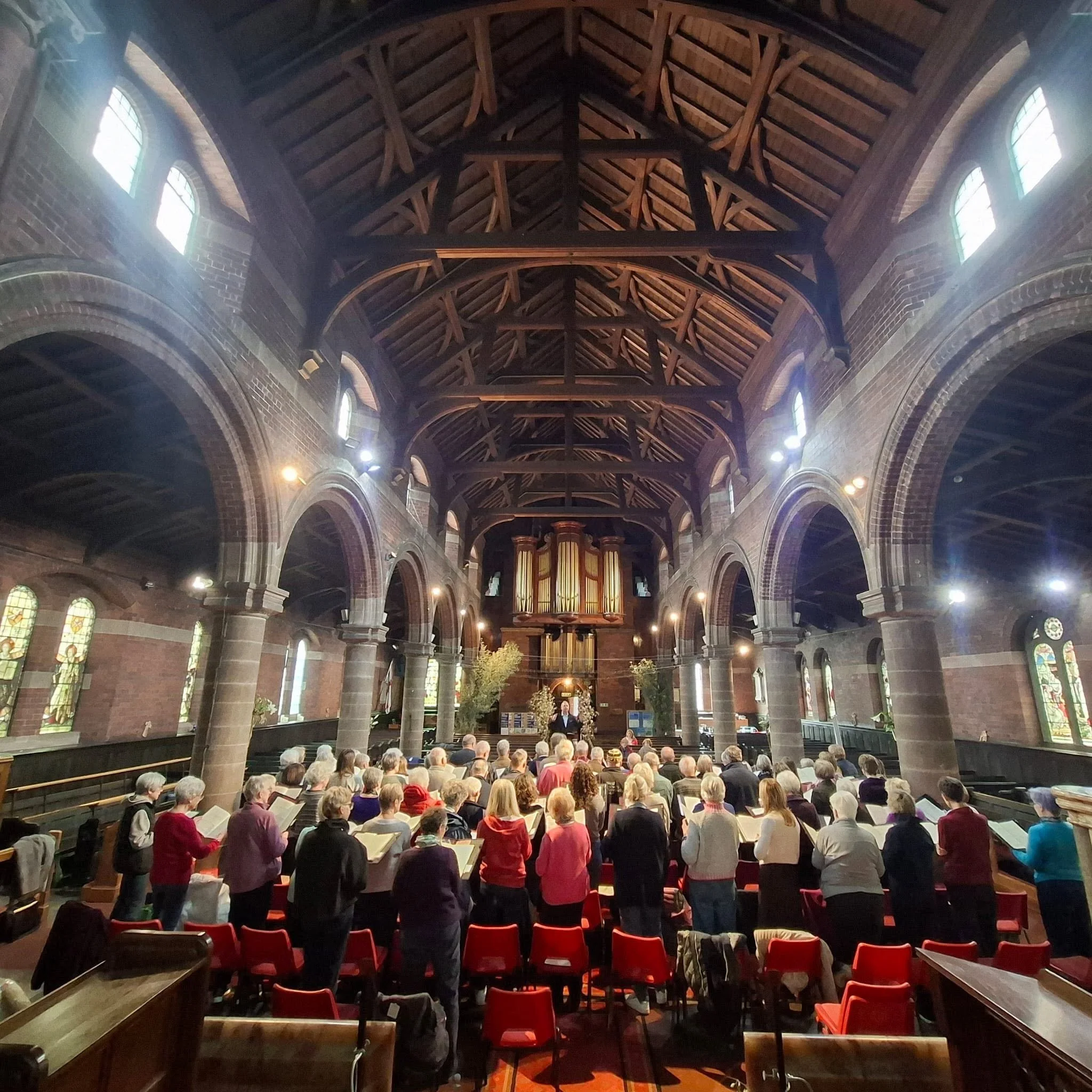
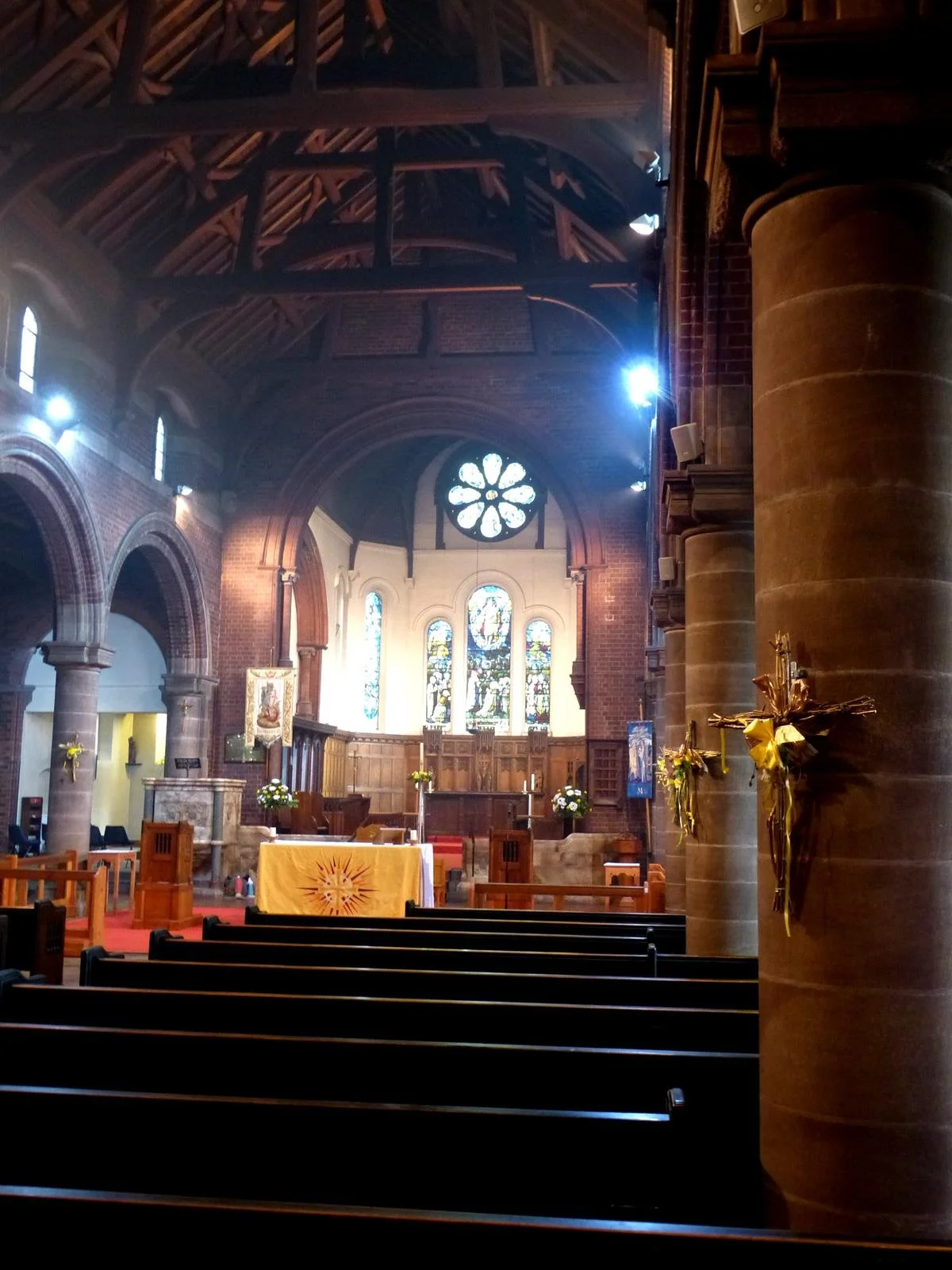
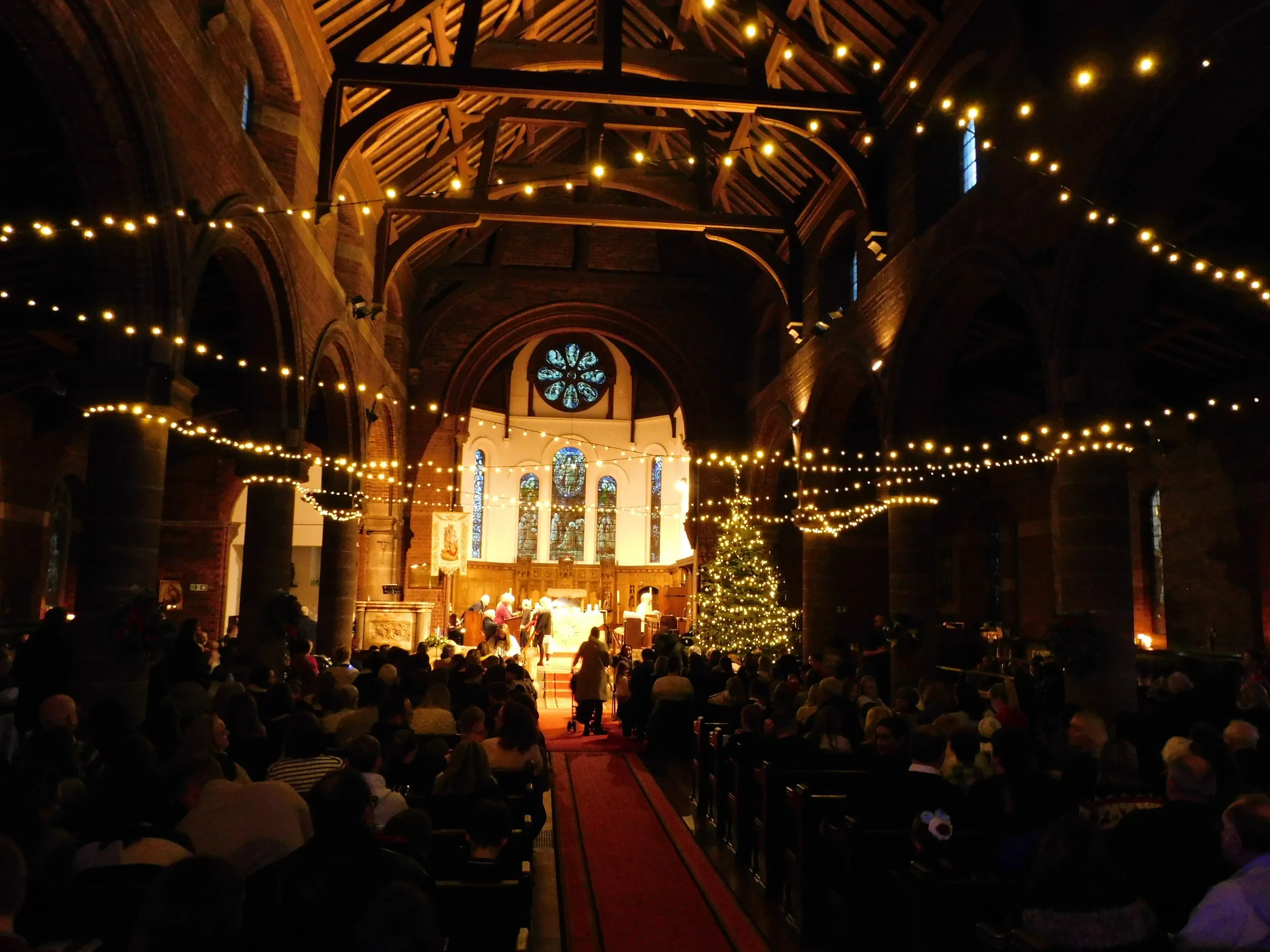
Inside, visitors of all ages discover a remarkable and atmospheric space.
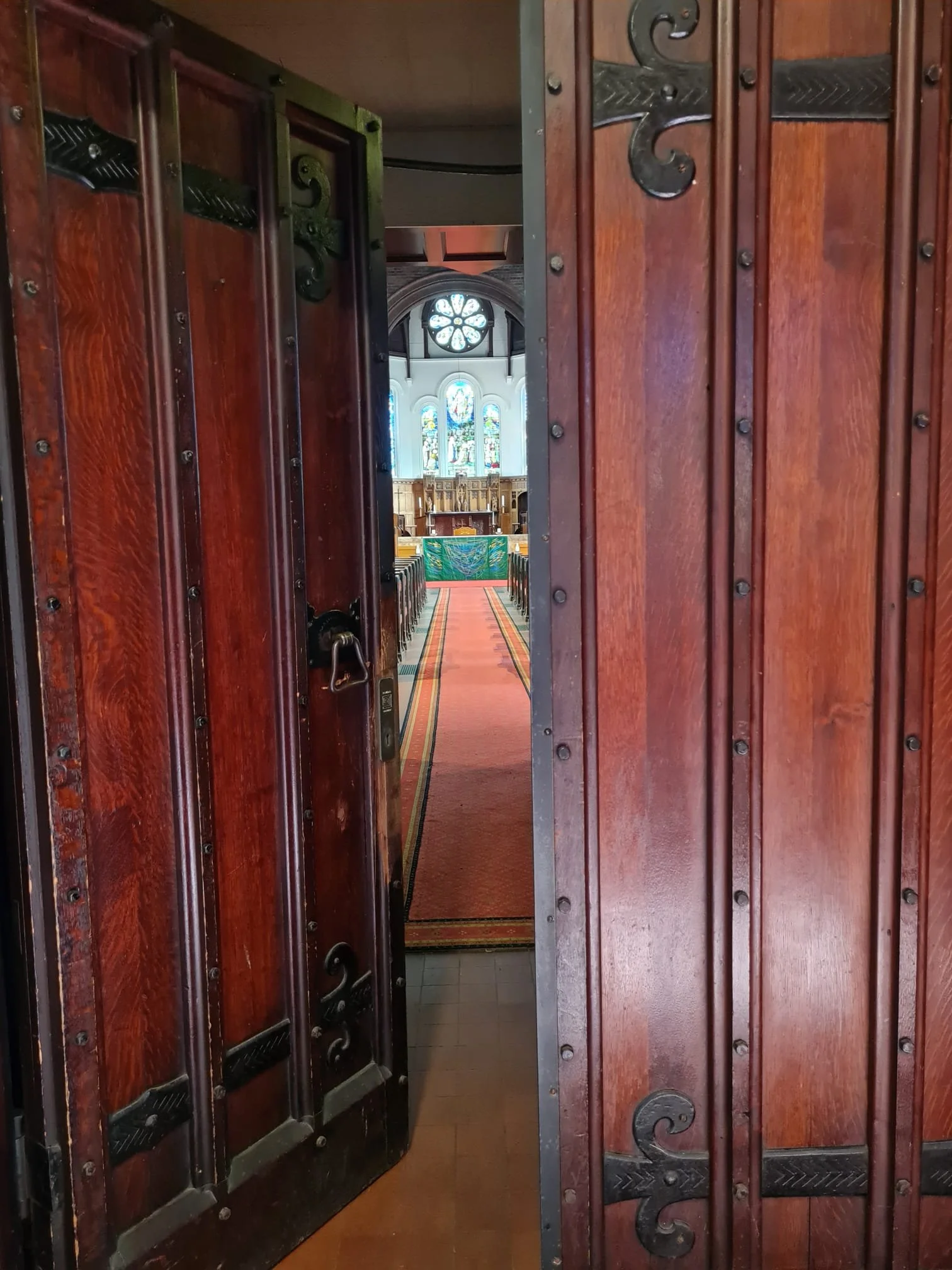
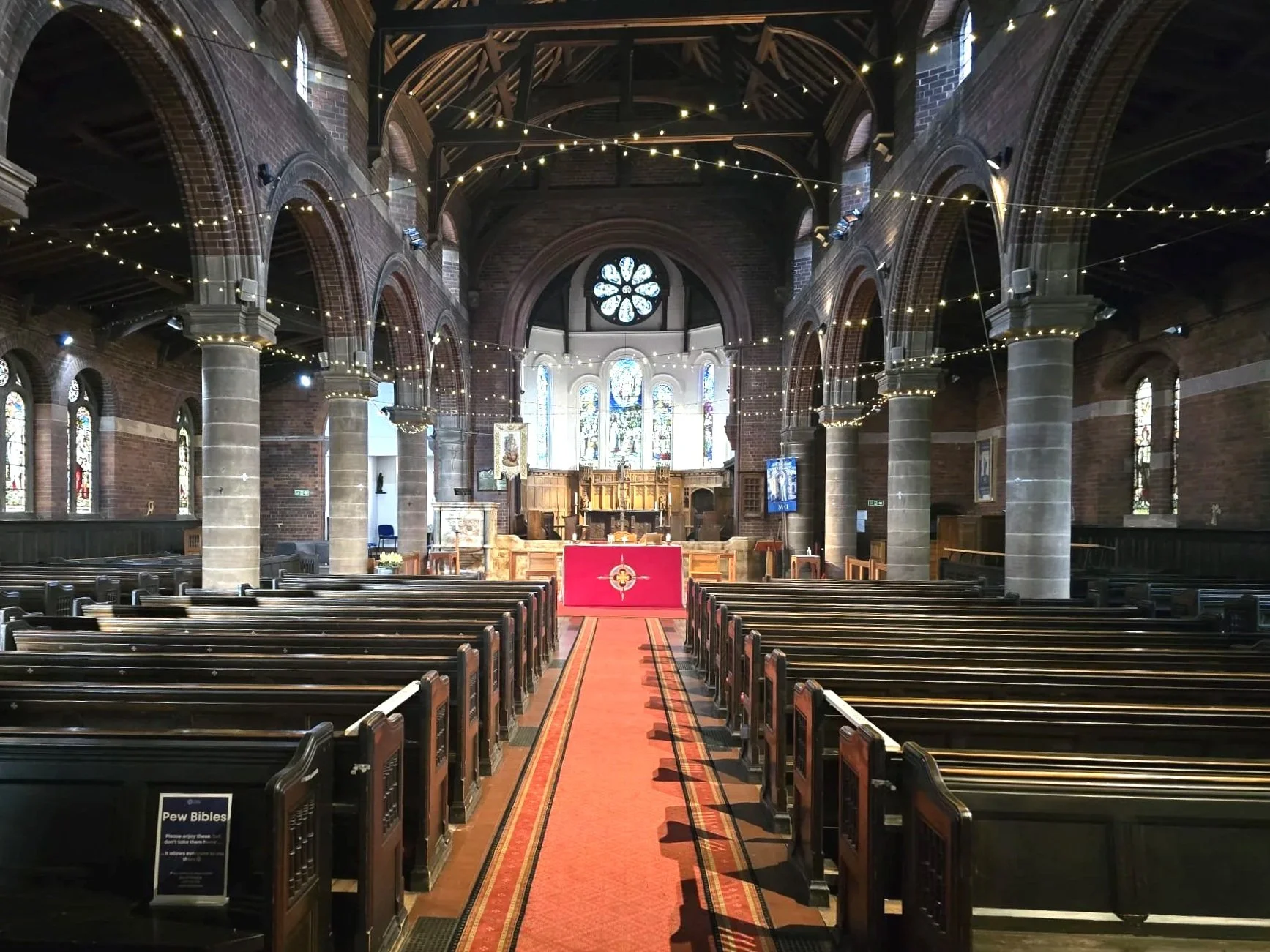
Tall arcades of Runcorn stone support a lofty timber roof, while stained-glass windows fill the church with colour and light.
Among the most significant are windows by the renowned Arts and Crafts artist Mary Lowndes, whose work can be found in churches and public buildings across the country.
Other notable features include the carved wooden reredos behind the high altar, the alabaster pulpit, the historic font and the impressive pipe organ housed above the west entrance.
Together these features tell stories of faith, craftsmanship and artistic achievement spanning more than two centuries.
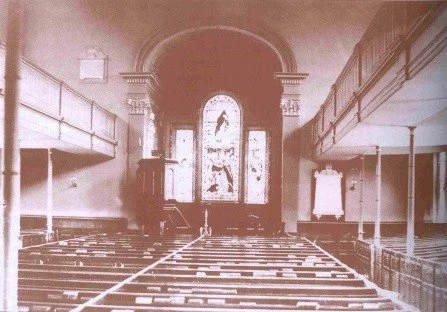
Interior prior to 1886
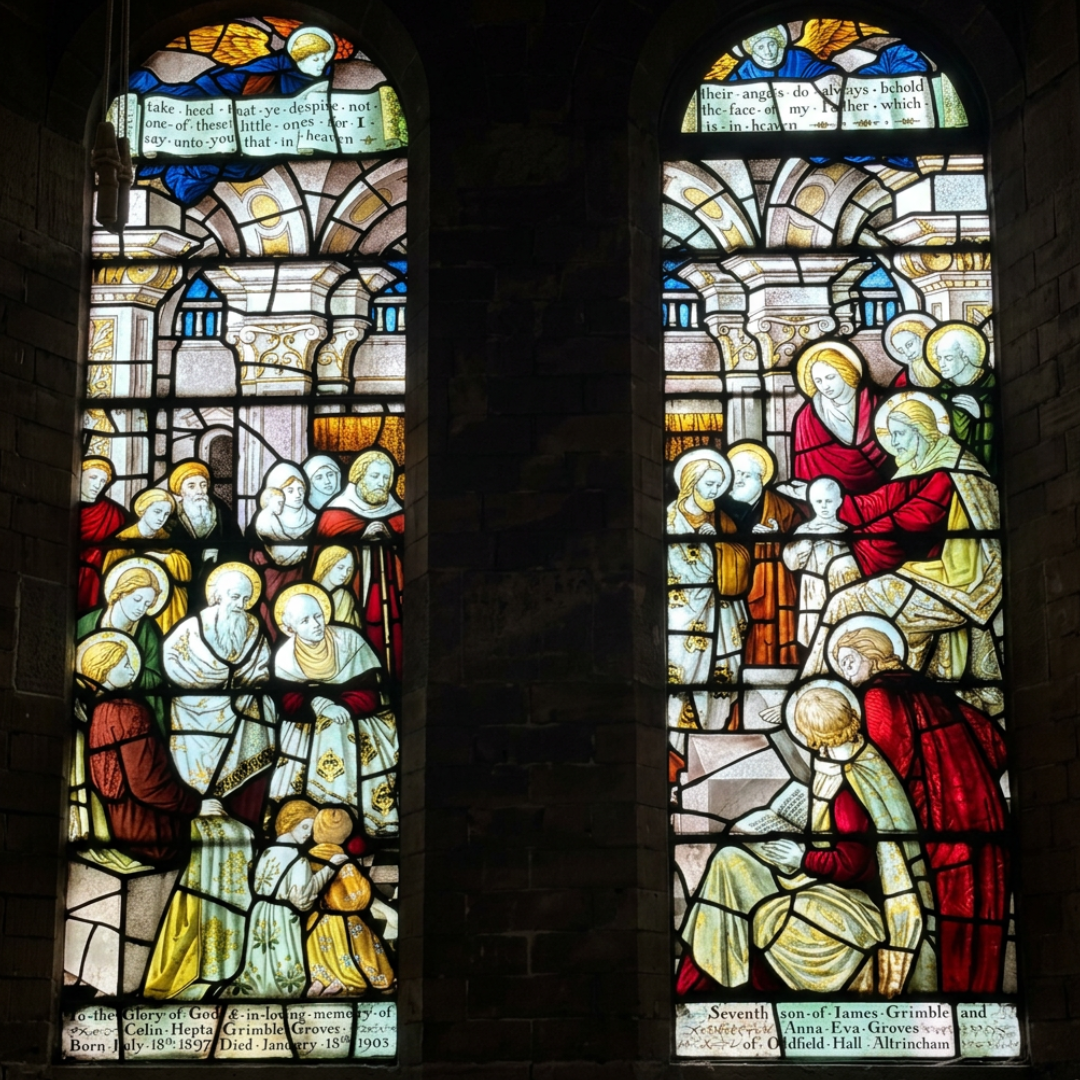
The Grimble Grove Window
Among the church's most treasured stained-glass windows is the Grimble Grove Window in the south aisle.
Installed in 1903 by the respected firm Shrigley and Hunt, it was commissioned in memory of Colin Hepta Grimble Grove, who died aged just six years old.
The window depicts Christ surrounded by children, and, if visitors look carefully, the face of the child nearest to Jesus is believed to be a portrait of Colin himself, drawn from a photograph.
More than a beautiful work of art, the window tells a deeply human story of love, loss and remembrance, connecting the church to one of Altrincham's prominent local families.
It is a powerful reminder that the heritage of St George's is not only architectural, but also personal, preserving the stories of the people who have shaped the life of the town across generations.
Externally, St George's is an impressive example of Victorian church architecture.
Constructed primarily of red brick with stone detailing and decorative terracotta features, the building combines strength, elegance and craftsmanship.
The soaring spire, completed in 1873, has become an enduring feature of Altrincham's skyline.
The church's carefully balanced proportions, rich materials and prominent setting ensure that it remains one of the most important historic buildings in the town.
The church also reflects the changing history of worship and community life in England.
Throughout its history, St George's has adapted to meet the needs of each generation whilst respecting its historic character.
Sensitive alterations have enabled the building to remain active and relevant, including the introduction of a nave altar and flexible worship space.
These changes have ensured that the church continues to function as a welcoming gathering place while preserving the architectural and historical significance that makes it special.
Today, the heritage of St George's belongs not only to the church congregation but to the whole town.
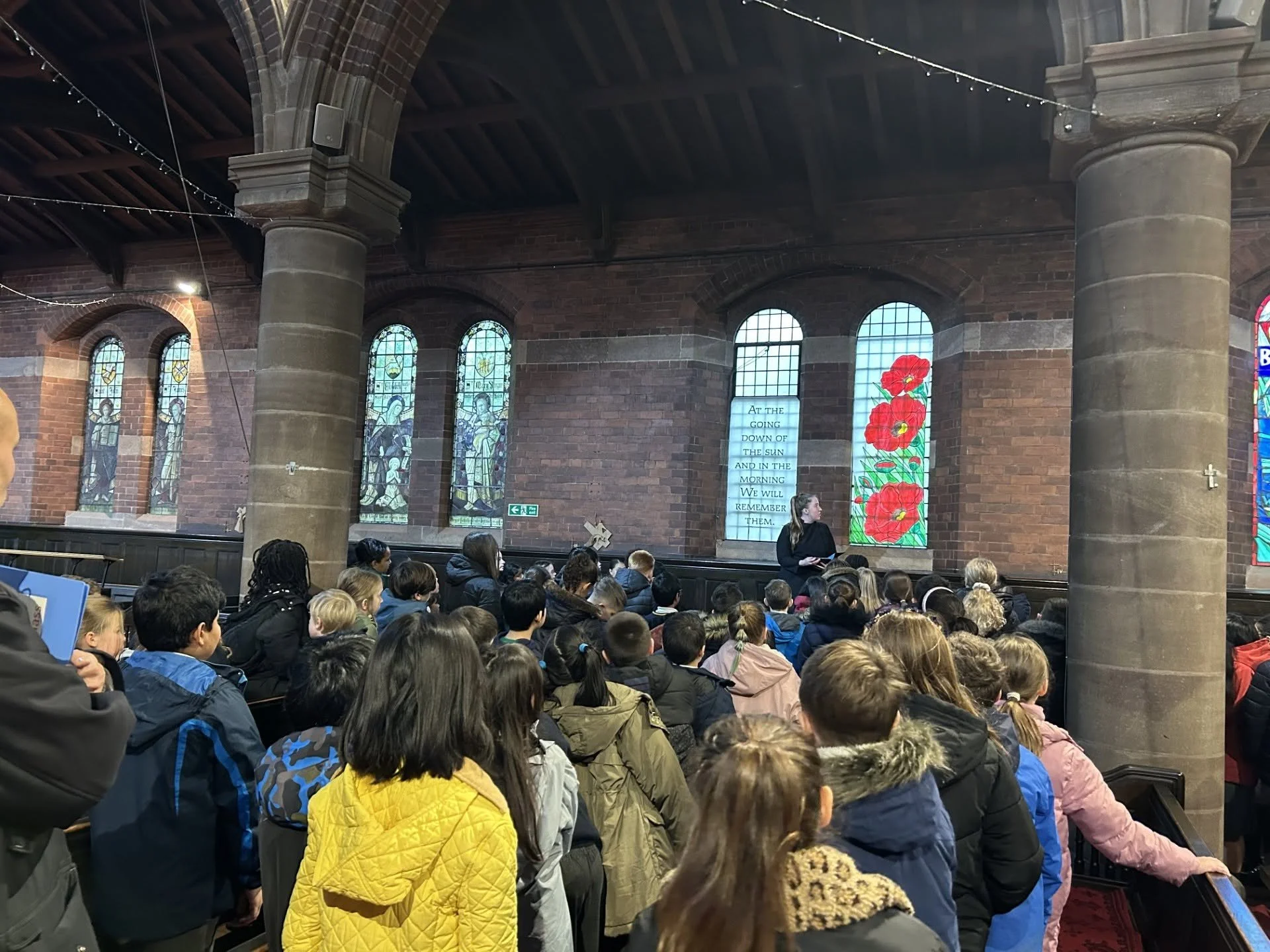
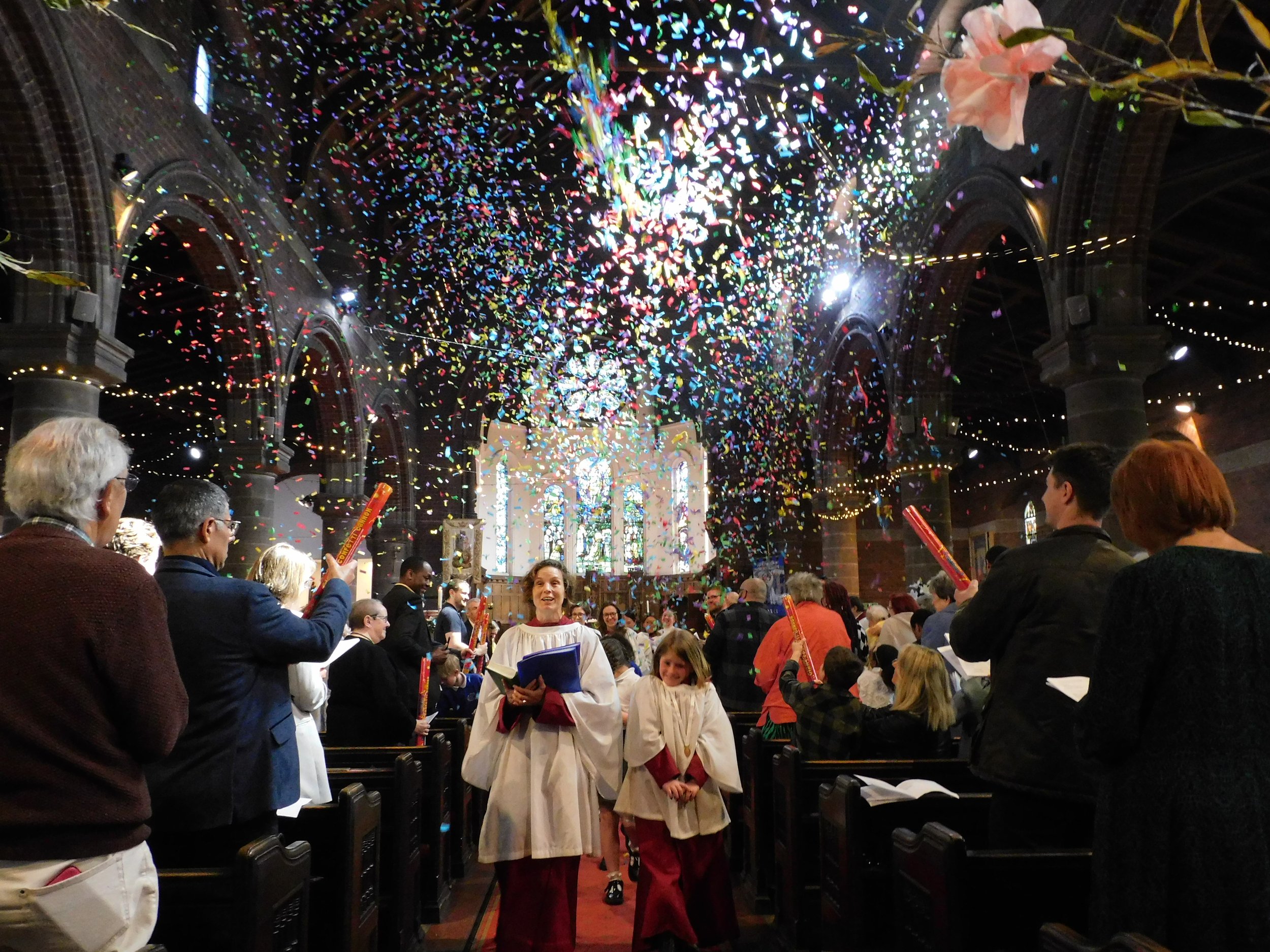
The building hosts school services, concerts, exhibitions, remembrance events, community celebrations and cultural activities that bring together people of all ages, backgrounds and beliefs.
Thousands of people enter the building each year, whether for worship, education, music, heritage events or simply to enjoy a moment of quiet reflection.
Through these activities, the church helps local people connect with the stories, traditions and shared identity of Altrincham.
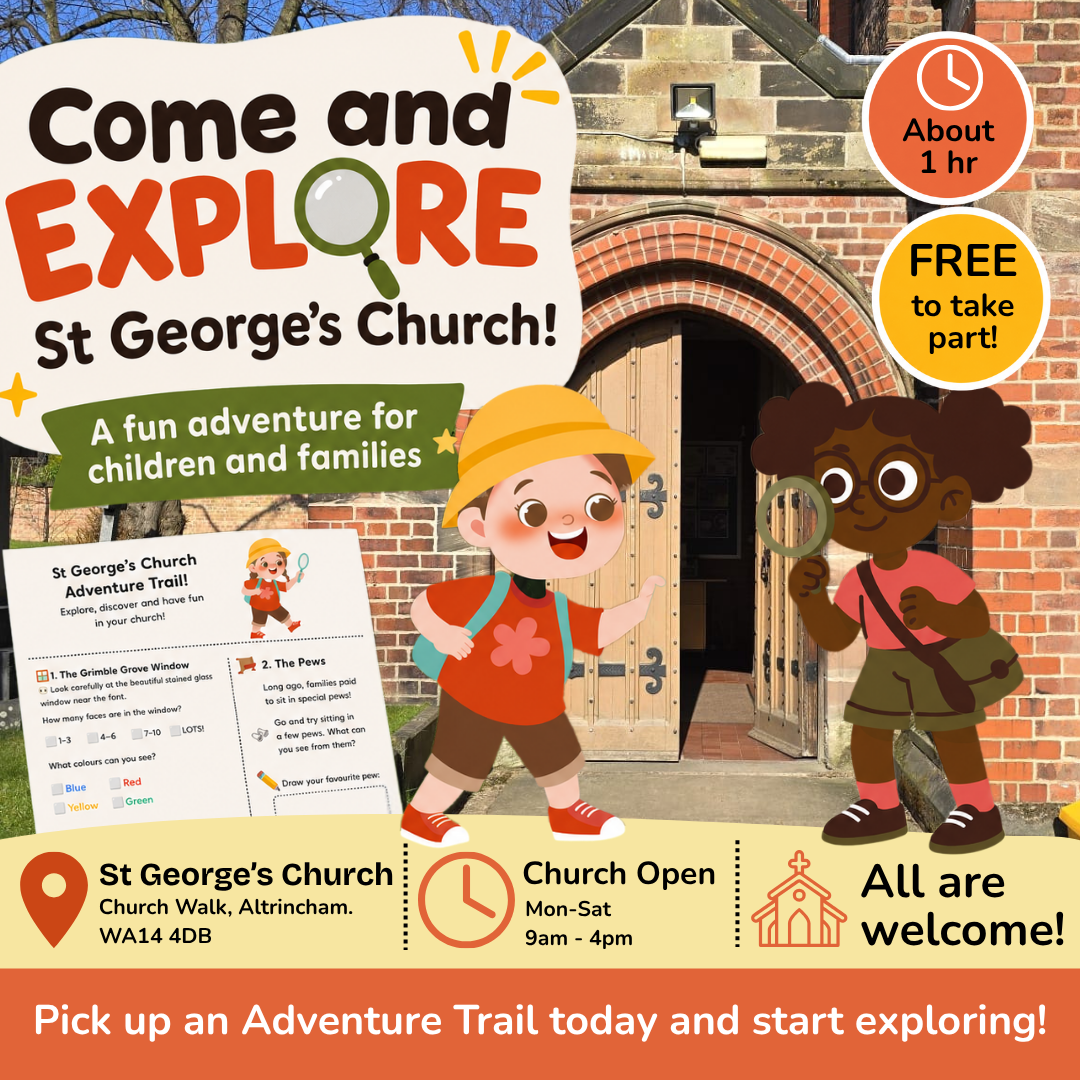
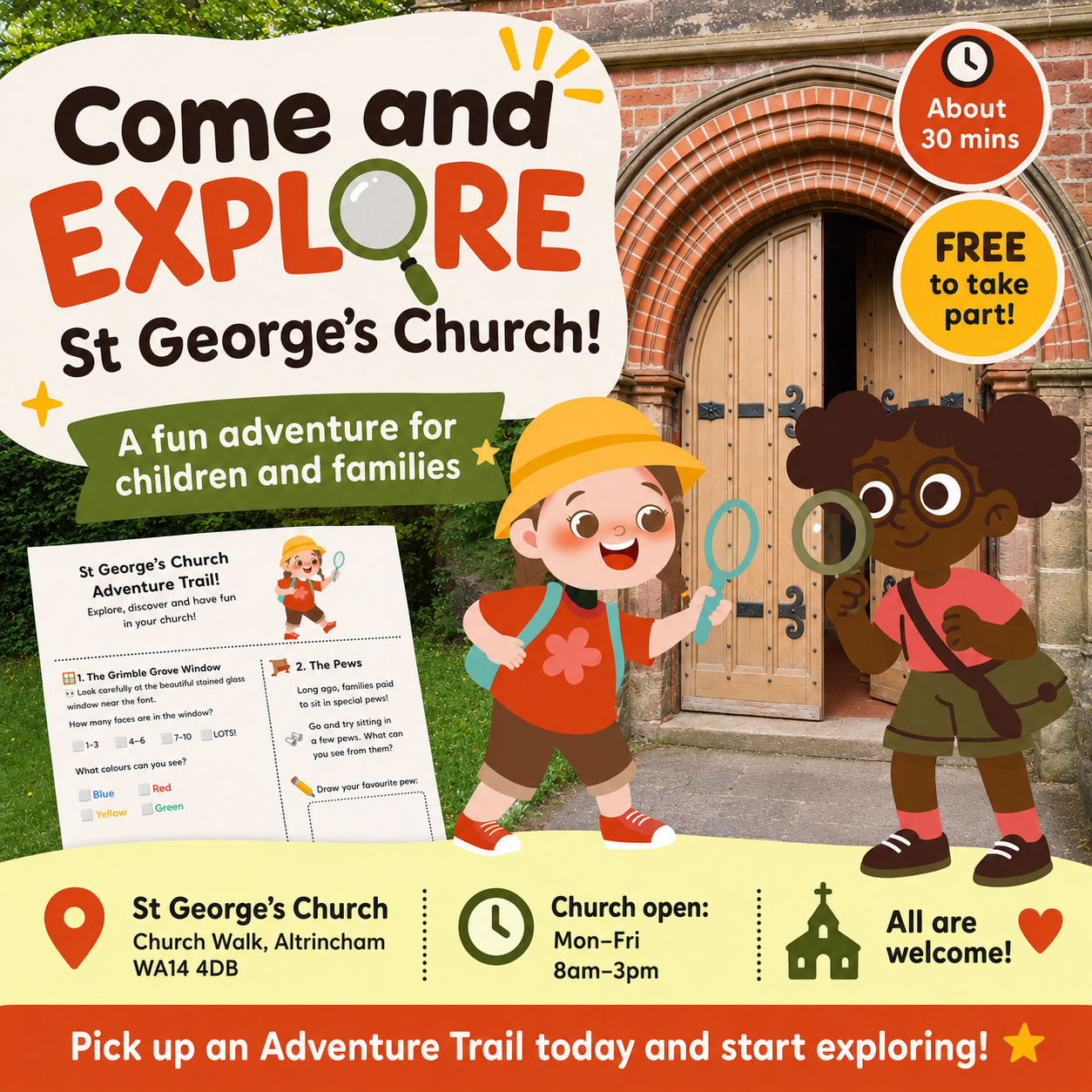
We are committed to making sure that all ages and stages can access our church, and so we have put together a range of resources and activity sheets for children too.
As Altrincham continues to grow and change, St George's remains both a historic treasure and a living community asset. Its heritage enriches the cultural life of the town, contributes to local distinctiveness, supports education and tourism, and provides opportunities for people to engage with history in meaningful ways.
By caring for this remarkable building and improving access to it, we are not simply preserving the past; we are ensuring that future generations can continue to discover, enjoy and benefit from one of Altrincham's most important historic landmarks.
Heritage in Action:
More Than a Historic Building
For over two centuries, St George's has been woven into the story of Altrincham. Today, that heritage continues to shape community life through education, culture, wellbeing and civic engagement.
We believe that historic buildings are at their best when they are used, loved and shared, and every year thousands of people engage with the heritage of St George's through worship, community events, concerts, school visits and open access.
-
![]()
Supporting Education and Learning
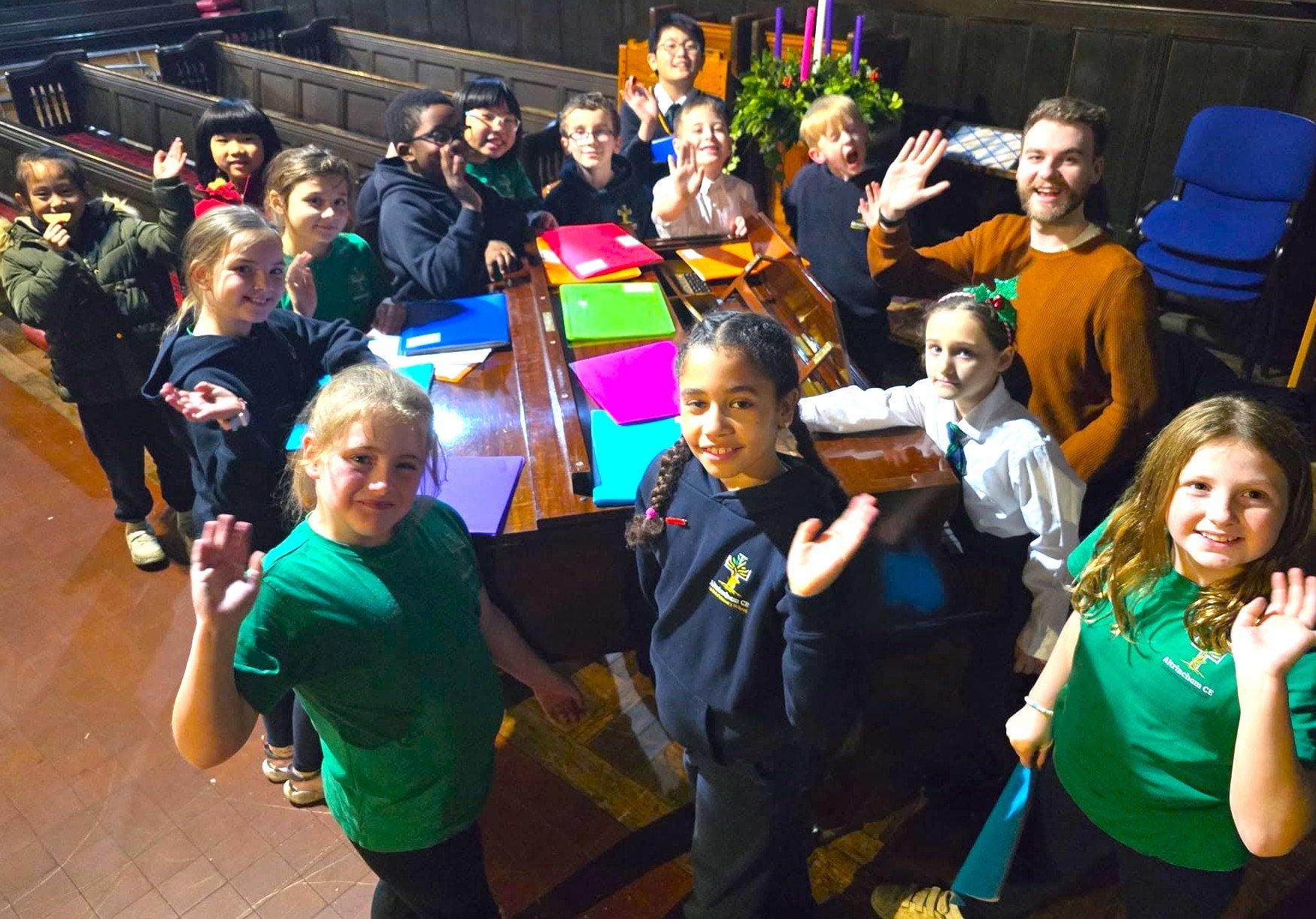
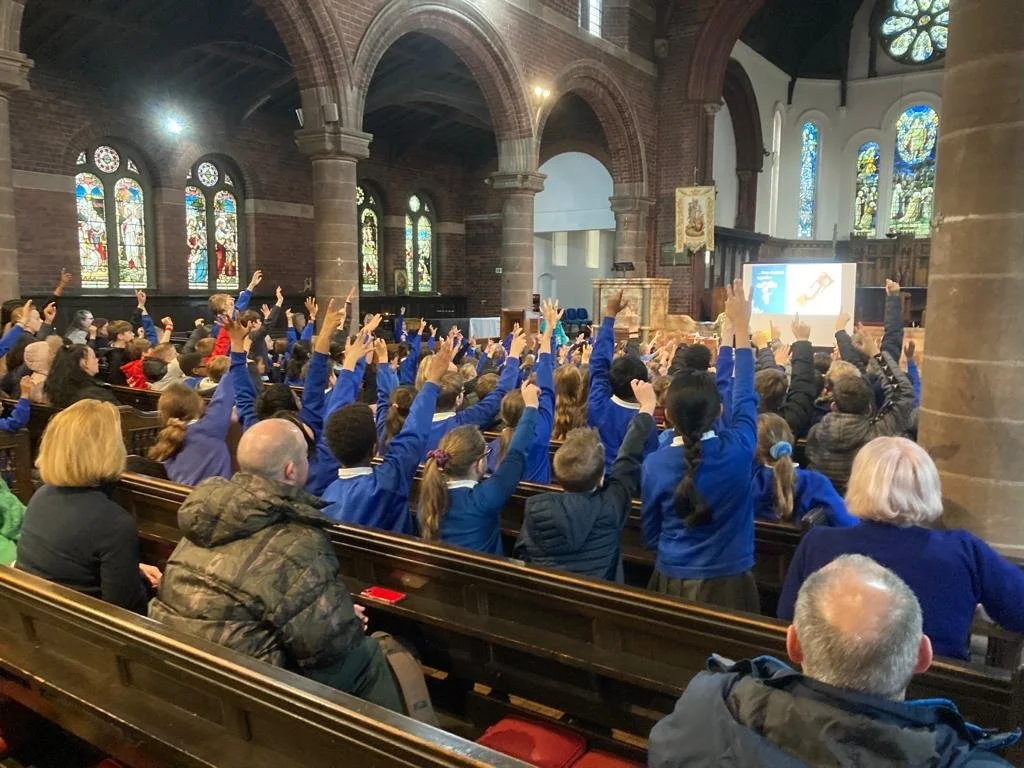
Our close partnership with Altrincham CE Primary School & other local schools means that hundreds of children visit the church throughout the year for services, celebrations and educational activities.
Pupils learn about local history, architecture, faith and community within a building that has served generations of Altrincham families.
We also work with local nurseries, youth groups and families, helping young people explore their town's heritage through hands-on experiences rather than textbooks alone.
-
![]()
Preserving Altrincham's Stories
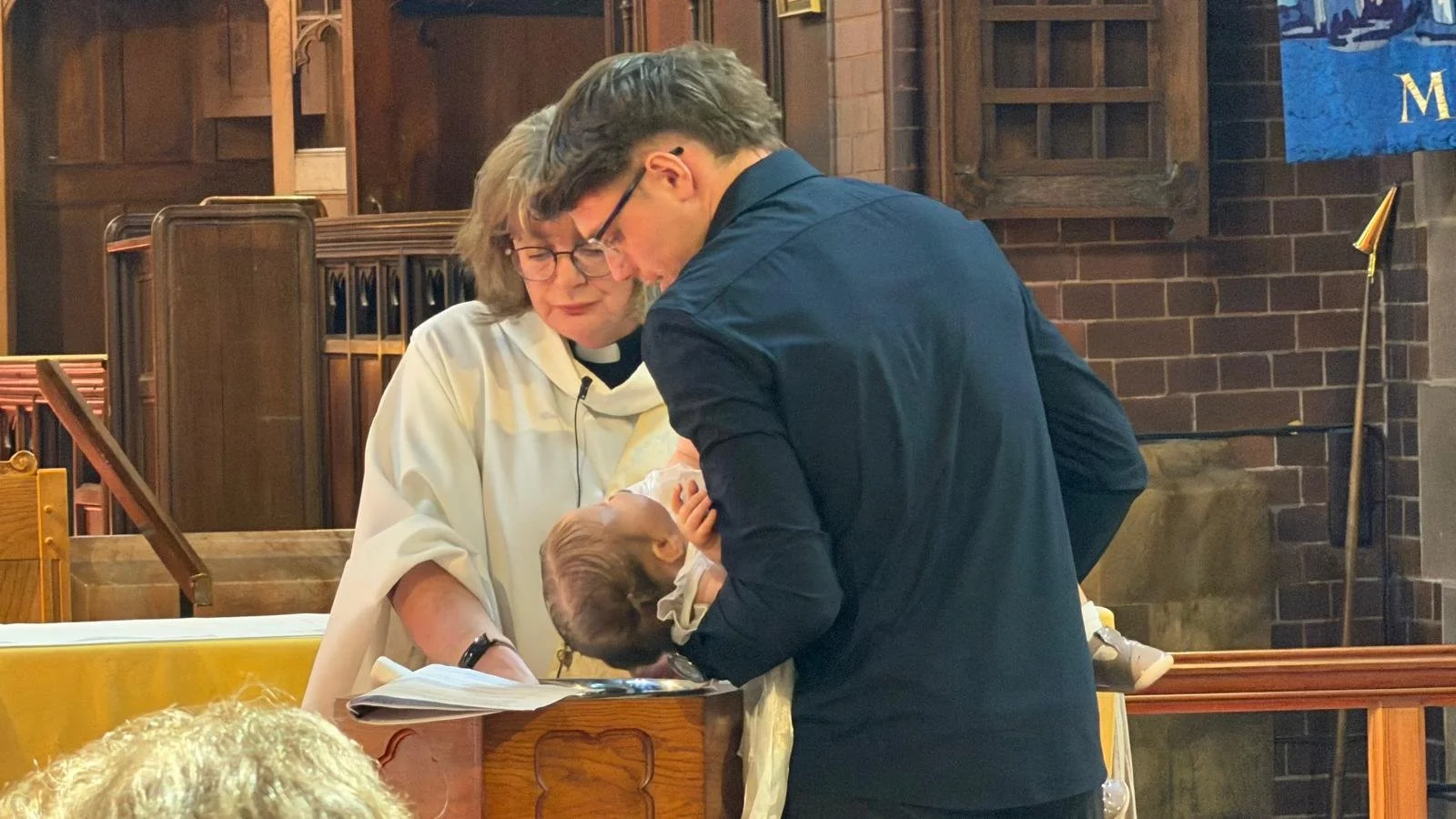
The church has witnessed the lives of countless local people since 1799. Through baptisms, weddings, funerals and memorial services, St George's helps preserve the personal and collective memories of the town.
Many families return generation after generation, maintaining a living connection between the people of Altrincham and one of its oldest public buildings.
-
![]()
A Home for Music and Culture
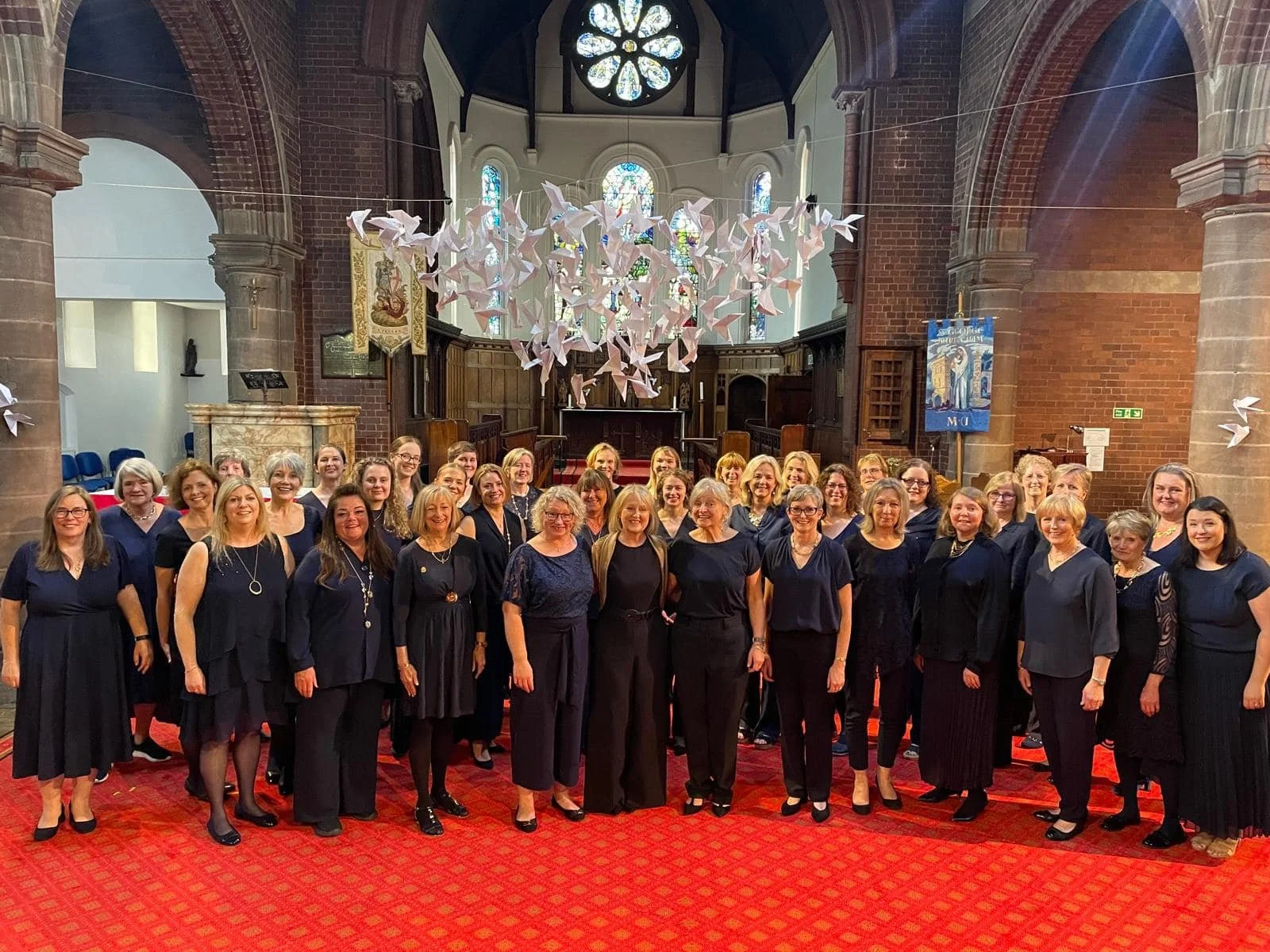
The exceptional acoustics and atmosphere of St George's make it a valuable cultural venue for the town. The church regularly hosts choirs, concerts and performances, bringing together performers and audiences from across Greater Manchester.
Through music, art and cultural events, new audiences are introduced to the building and its heritage, ensuring that it remains relevant and accessible to contemporary communities.
-
![]()
Open to Everyone
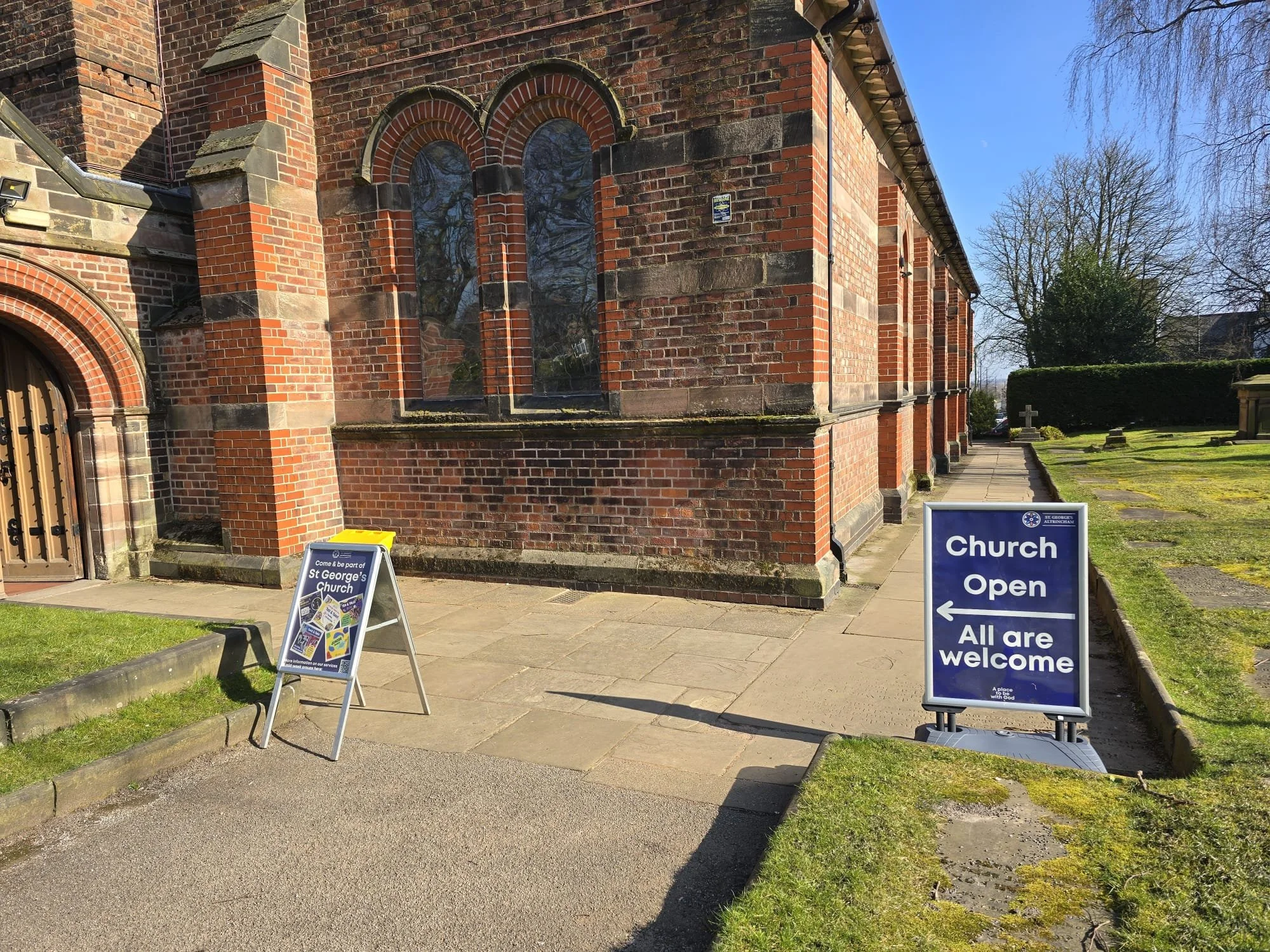
St George's is open throughout the week, welcoming visitors, workers, shoppers and tourists seeking a place of quiet reflection.
Many people discover the church while exploring the town centre, while others visit as part of Altrincham's wider heritage offer.
The building provides a free and accessible space where people can connect with history, architecture and spirituality regardless of their background or beliefs.
-
![]()
Part of Altrincham's Heritage Trail
St George's is proud to be part of the Altrincham Heritage Trail, helping residents and visitors discover the stories that have shaped the town.
The church's architecture, churchyard, stained glass and historic furnishings provide a unique window into more than two centuries of local history, while digital interpretation helps bring those stories to life for new audiences.
-
![]()
Inspiring the Next Generation
We believe that heritage should be discovered, explored and enjoyed by people of all ages. During school holidays, our free Church Explorers Trail invites children and families to become heritage detectives, uncovering hidden features, symbols and stories throughout the building.
As they search for stained-glass windows, memorials, architectural details and objects linked to the church's history, young visitors learn about both the building and the wider story of Altrincham.
By encouraging children to engage directly with their local heritage in a fun and accessible way, the project helps foster curiosity, pride in place and a lasting connection with one of the town's most important historic buildings.
The trail is freely available whenever the church is open and helps remove barriers to heritage engagement, particularly for families who may not otherwise visit historic buildings or museums.
-
![]()
Bringing Communities Together
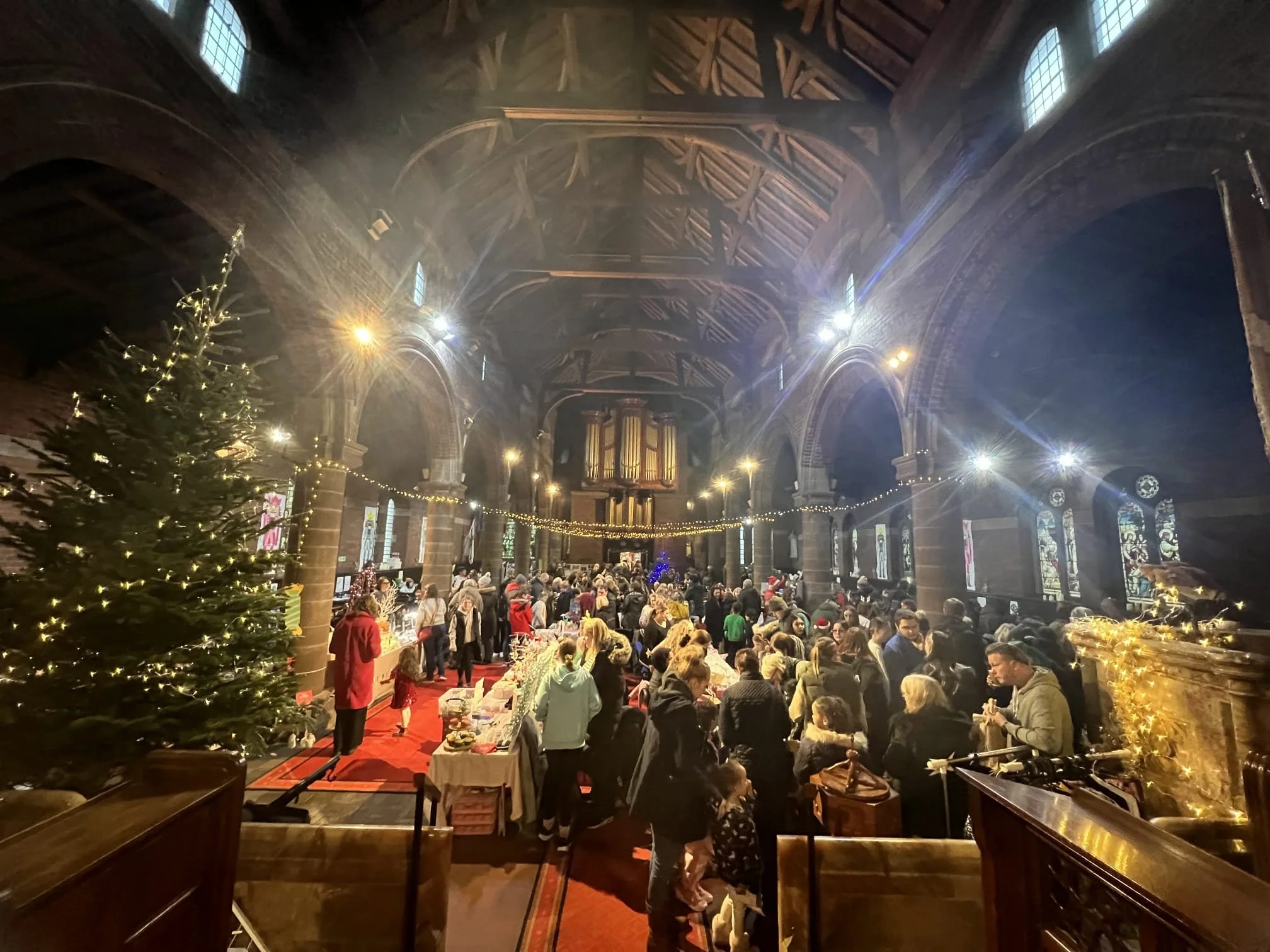
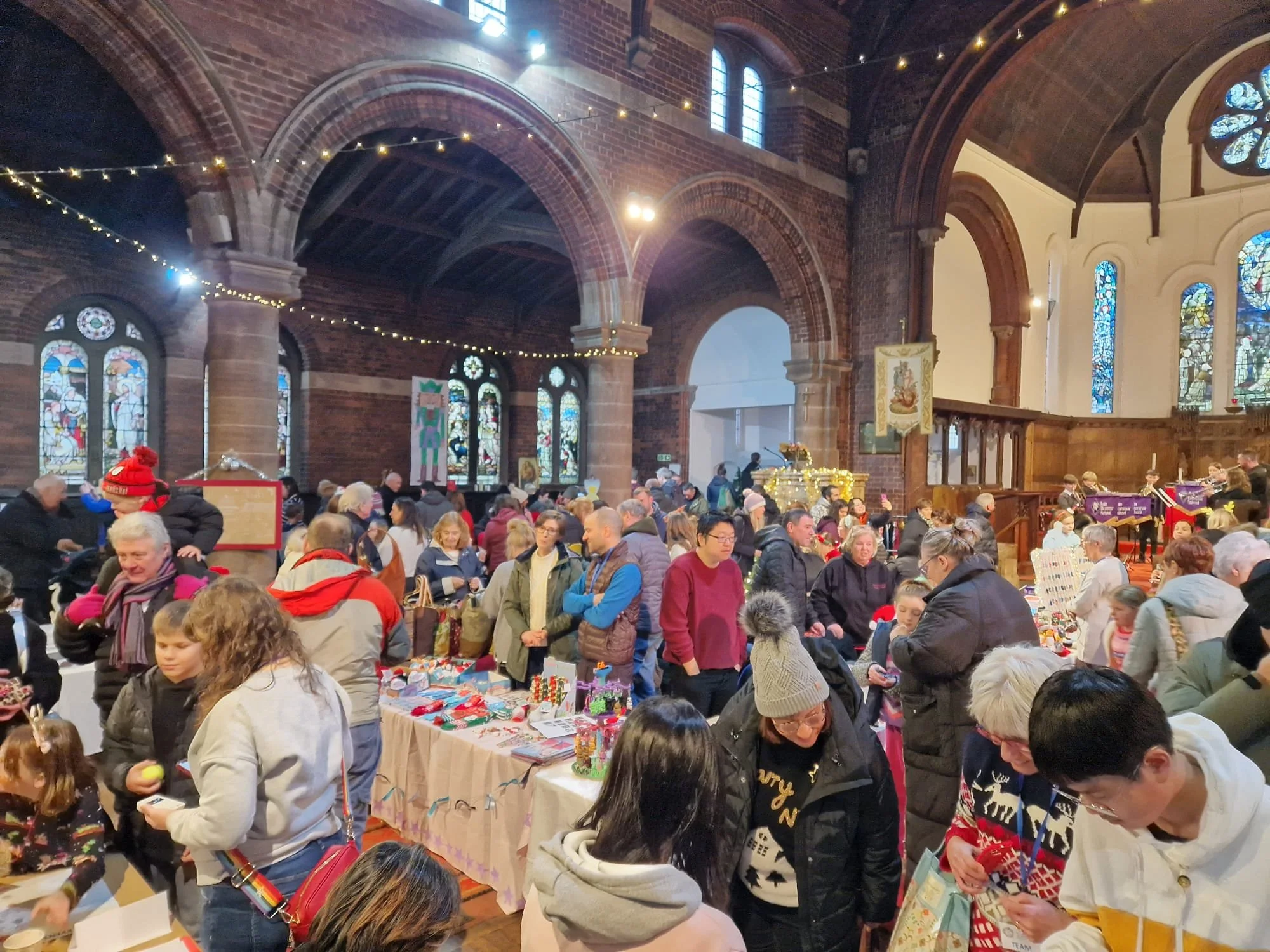
Throughout the year the church hosts events that attract people from across the community, including Christmas celebrations and Fayres, remembrance events, family activities, concerts and civic gatherings.
These events allow people to encounter the building in new ways, creating shared experiences that strengthen community identity and foster a deeper appreciation of Altrincham's heritage.
-
![]()
A Pilgrim Place for the North
St George's is proud to be part of the Church of England's Pilgrim Places initiative, developed through the Faith in the North movement. Pilgrim Places recognises churches that offer a welcoming, peaceful and reflective space where visitors can pause, explore and find meaning, whether they arrive as tourists, heritage enthusiasts, local residents or people seeking spiritual refreshment. Through resources, trails and interpretation, the initiative helps people engage more deeply with the stories, architecture and significance of historic churches.
By becoming a Pilgrim Place, St George's joins a growing network of churches across Northern England, raising the profile of both the building and Altrincham itself while encouraging new visitors to discover the town's rich heritage.
The programme also complements our commitment to open access, heritage interpretation and family engagement, helping ensure that this historic church remains a place of welcome, curiosity and encounter for future generations.
-
![]()
Looking to the Future
Our vision is to ensure that St George's continues to serve Altrincham for generations to come. By improving access, welcoming more visitors and creating new opportunities for learning and participation, we aim to unlock the full potential of this remarkable Grade II listed building.
Caring for our heritage is both about preserving what has been - the history, the bricks and mortar - and also the responsibility of investing, and making sustainable, a place that continues to enrich the cultural, educational and social life of the town.


Some Numbers
-
![]()
225+
Years serving Altrincham
Since the church was first established in 1799. -
![]()
Grade II
Listed Building
Recognised as being of national architectural and historic significance. -
![]()
6 Days
Open Every Week
Welcoming visitors, workers, shoppers and those seeking a quiet space. -
![]()
200+
School Children Each Term
Attending services, educational visits and heritage activities. -
![]()
600+
Visitors to our Christmas Fayre
Bringing together church, school and community. -
![]()
600+
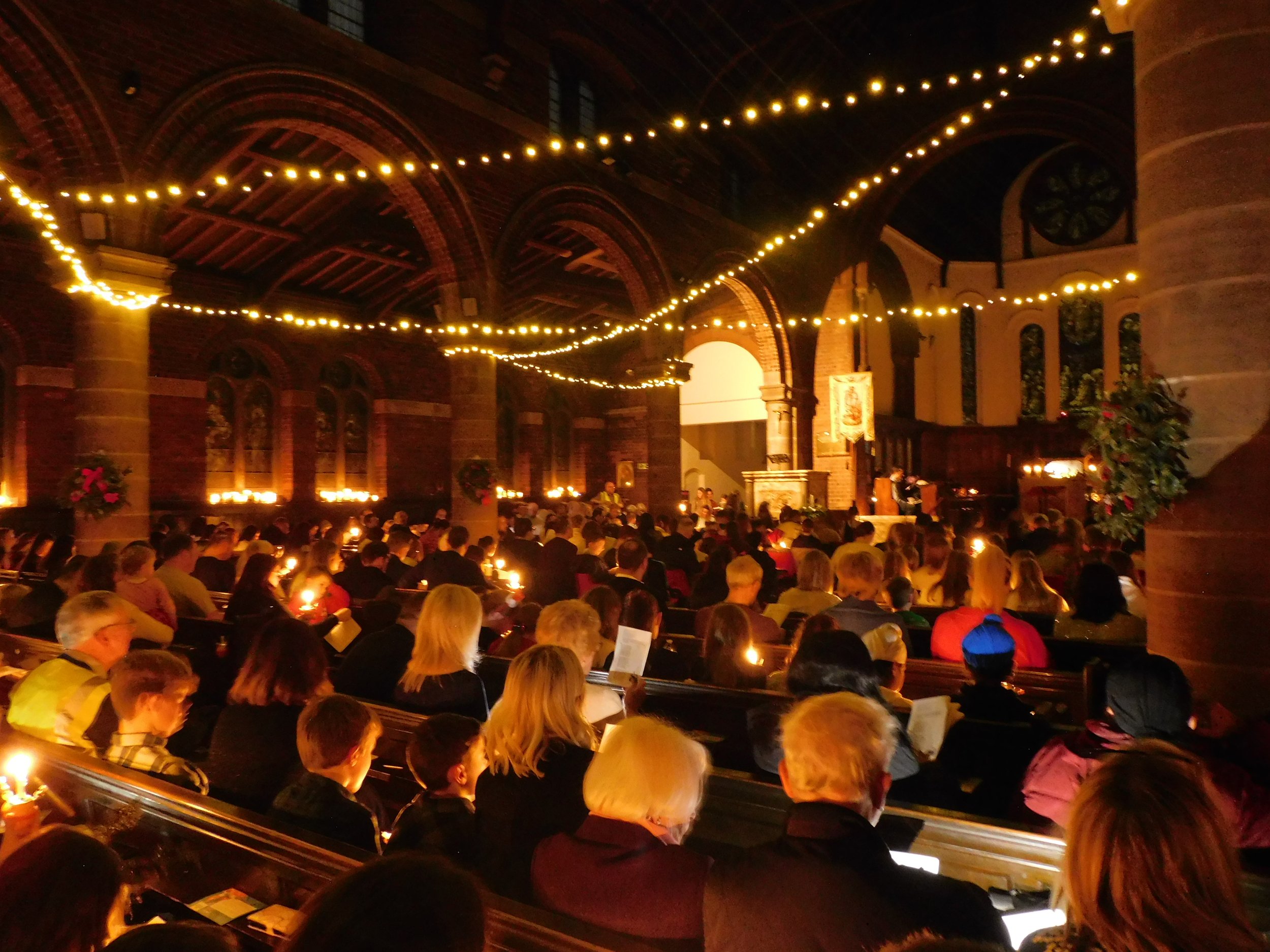
Christingle Attendees
One of Altrincham's largest annual community celebrations. -
![]()
15+
Young Choristers
Receiving musical education through Alty Trebles and church music. -
![]()
Thousands
People Engaging with Heritage Every Year
Through services, concerts, events, exhibitions, trails and open access. -
![]()
0
Toilets or refreshment facilities, which means that all who use our building have to walk to our Parish Centre to use them there.